 Care
Care and nutrition: a healthy dog from puppy to senior
Good nutrition and daily care are the foundation of a healthy life for your dog. They prevent many problems and help you spot changes early. This guide sets out what a dog needs, from puppy to senior.
Feeding by life stage
- Puppy: a puppy grows fast and needs food suited to that growth. Feed a complete puppy food, spread over three to four meals a day. For large and giant breeds, choose a large-breed puppy food and ask your vet about the right amount.
- Adult dog: most adult dogs get two meals a day. Choose a complete food that suits size, activity and any health problems. In large, deep-chested breeds, several smaller meals and rest after eating reduce the risk of gastric torsion.
- Senior: older dogs often move less and need less energy, but still enough protein to maintain their muscles. Ask your vet whether an adapted diet makes sense.
Always change food gradually, over a week or more, to avoid digestive upsets. Make sure fresh water is always available.
How much to feed?
The amount recommended on the pack is a starting point; the right amount depends on your dog. Look mainly at its body condition: you should be able to feel the ribs easily without seeing them clearly, and from above it should have a waist. Vets use a body condition score for this.
Keep an eye on your dog's weight and ask your vet what a healthy weight is for your dog. Count treats and scraps too: as a rule of thumb, no more than ten per cent of daily energy should come from treats.
Some foods are toxic to dogs, such as chocolate, grapes and raisins, xylitol (in sugar-free products), onions and garlic, macadamia nuts and alcohol. Cooked bones can splinter. Contact your vet immediately if your dog eats any of these.
Coat care
Care depends heavily on the coat type. Every breed profile on Puppymakelaar shows what the breed needs.
- Short coat: weekly brushing with a rubber brush is usually enough.
- Double coat: regular brushing down to the skin, daily during the moult. Don’t shave a double coat without good reason: the undercoat protects against heat and cold.
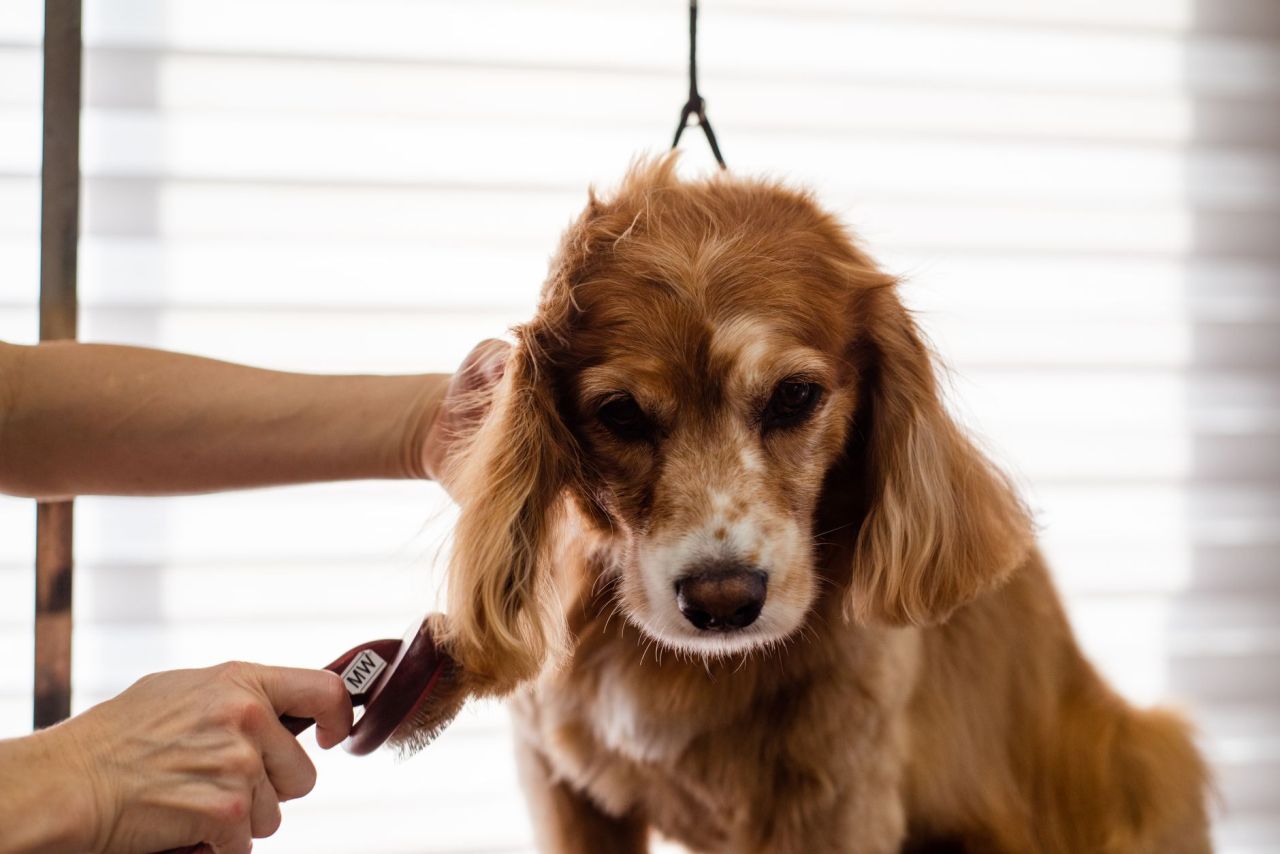
- Long or curly coat: brushing several times a week to prevent mats, and regular clipping by a groomer.
- Wiry coat: in many terriers and wire-haired breeds the coat is hand-stripped to keep it firm and protective.
Don’t bathe your dog too often, and only with a dog shampoo.
Teeth, nails, ears and eyes
- Teeth: tartar and gum disease are common, especially in small breeds. Brush daily with dog toothpaste; human toothpaste is unsuitable. Chews help but don’t replace brushing.
- Nails: nails that click on the floor are too long. Trim them carefully, or have it done if you’re unsure. Don’t forget the dewclaw.
- Ears: check weekly for redness, smell or dirt, especially in dogs with drop ears and after swimming.
- Eyes: gently wipe away tear stains. Redness, cloudiness or squinting need a vet visit.
- Paws: after walks, check for small wounds, grass seeds between the toes and, in winter, road salt.
Preventive health care
- Vaccinations: puppies receive a course of core vaccinations against diseases including distemper, parvovirus and infectious hepatitis, followed by boosters as advised by your vet. Dogs are often vaccinated against leptospirosis and kennel cough as well. For travel abroad, rabies vaccination is usually required.
- Worming: puppies are wormed frequently; after that, the frequency depends on your dog’s lifestyle. Your vet may also suggest a faecal test.
- Fleas and ticks: ticks can transmit diseases. Use a product your vet recommends and check your dog after walks in woodland and long grass.
- Annual check-up: a yearly visit, more often as your dog gets older, helps detect problems early, such as a heart murmur, dental problems or weight loss.
- Neutering: the pros, cons and best timing vary by dog and breed. Discuss it with your vet.
The older dog
Small breeds live longer on average than large breeds; a giant breed is often already a senior by six or seven. Older dogs benefit from shorter but regular walks, a soft, warm bed, non-slip mats and attention to stiffness or pain. Watch for changes in drinking, urinating, appetite, weight and behaviour; also read the guide Animal welfare and enrichment on recognising pain.
In short
- Feed a complete diet that suits age, size and activity.
- Adjust according to body condition, not just the pack, and avoid excess weight.
- Know the toxic foods and keep them out of reach.
- Care for coat, teeth, nails, ears and eyes according to your dog’s needs.
- Keep up with vaccinations, worming and parasite control with your vet.
- Give an older dog extra comfort and have it checked regularly.
Sources
- Global Nutrition Guidelines (World Small Animal Veterinary Association (WSAVA))
- Guidelines for the Vaccination of Dogs and Cats (World Small Animal Veterinary Association (WSAVA))
- Richtlijnen voor de bestrijding van parasieten bij honden en katten (European Scientific Counsel Companion Animal Parasites (ESCCAP))