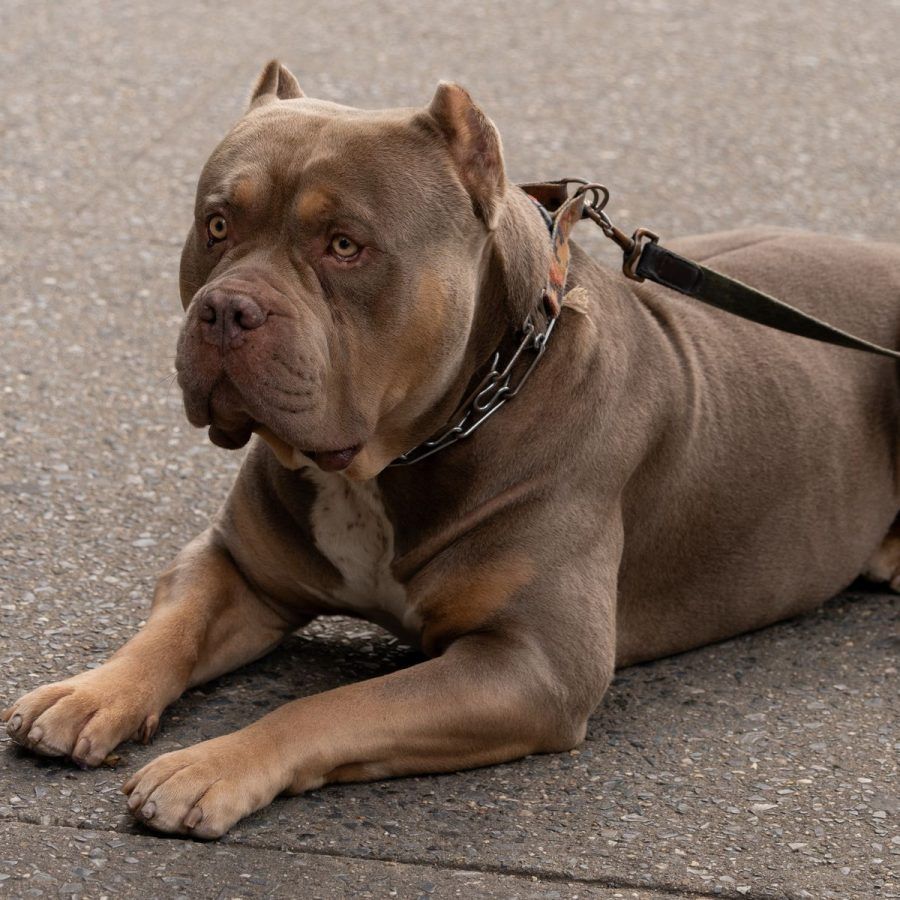
American Bully
The American Bully was developed in the United States from the American Pit Bull Terrier and related breeds, with a compact, muscular build. It is family-oriented, playful and usually friendly towards people.
Health
These examinations come from the official breeding programme for the breed American Bully by Dierenwelzijn Vlaanderen (Animal Welfare Flanders). They apply to the puppies’ parents.
In short
Both parents must have 3 examinations:
- 1 DNA test
- 2 X-ray examinations
The breeding programme also recommends 2 further examinations.
A sample for DNA tests can be taken either with a mouth swab or by a blood sample. To carry out the examinations, the breeder uses a vet or a laboratory. For each examination below, you can see from what age and how often it must be done. Ask the breeder for the results of both parent dogs.
Mandatory examinations (3)
-
Degenerative myelopathy (DM)
DNA test Once from birth
Official description
- Method
- DNA test
- Gene variant (for the laboratory)
- SOD1: c.118G>A
- Inheritance
- autosomal recessive
-
Elbow dysplasia (ED)
X-ray Once at least 1 year
Official description
- Method
- X-ray (CT may be recommended, but is not mandatory)
-
Hip dysplasia (HD)
X-ray Once at least 1 year (laxity views: at least 6 months)
Official description
- Method
- X-ray: VD view and laxity view (Vezzoni or PennHIP)
Recommended examinations (2)
-
Patellar luxation (PT)
Kneecap examination Once at least 1 year
Official description
- Method
- Palpation of the kneecap
-
Congenital heart disease (auscultation)
Heart examination Once at least 1 year
Official description
- Method
- Auscultation + if a heart murmur is present (from grade 1) echocardiography
The breeding programme also contains the breeding advice for each examination and general rules on inbreeding, the number of matings per stud dog and the use of frozen semen. You can find these in the official document.
Source: breeding programme American Bully, Dierenwelzijn Vlaanderen, last updated on 21/07/2026.
View the official breeding programme (PDF, in Dutch)
A breeding programme reduces the risk of hereditary conditions, but does not offer a 100% health guarantee.
Translation of the Dutch breeding programme by Puppymakelaar. In case of any difference, the official document prevails.
This breed profile is not a breed sheet within the meaning of the Flemish Breeding Decree (Fokkerijbesluit). The legal rules for breeding this breed are set out in the official breeding programme.
Considerations when buying
According to the breeding programme approved by Dierenwelzijn Vlaanderen, these examinations must be carried out on both parent dogs: Degenerative myelopathy (DM), Elbow dysplasia (ED) and Hip dysplasia (HD). The breeding programme also lists these recommended examinations: Patellar luxation (PT) and Congenital heart disease (auscultation). A puppy with a Flemish pedigree comes from parent dogs bred according to this breeding programme. Ask for the results of both parent dogs and compare them with the overview above. An American Bully needs daily walks and play, without overexertion in warm weather. Its short coat is easy to care for.

Questions for the breeder
- Have both parent dogs undergone all the mandatory examinations in the breeding programme, and may I see the results?
- What are the results of both parent dogs for Elbow dysplasia (ED) and Hip dysplasia (HD)?
- Will the puppy receive a Flemish pedigree from a recognised breed registry association?
- How are the puppies socialised before they go to their new home?
Breed-specific challenges
It is powerful, can be stubborn and is not always tolerant of other dogs. Early socialisation and consistent training are important. Check beforehand which local rules apply to this breed where you live.
More background
General guides that help you understand this breed information and choose well.