 Health
DNA tests in dogs: how to read clear, carrier and affected
A DNA test exists for many hereditary conditions in dogs. The breeding programmes approved by Dierenwelzijn Vlaanderen (DWV) state for each breed which DNA tests are mandatory or recommended for the parent dogs, and which breeding advice applies to which combination of results. This guide explains how to read those results, using DWV's terms.
What a DNA test examines
A DNA test checks whether a dog carries a specific variant of a gene that causes a hereditary condition. For each DNA test, the breeding programme states the variant tested, for example ABCB1: c.228_231del for multidrug sensitivity (MDR1). A DNA test can be done from birth and only needs to be carried out once.
In the breeding programmes, most conditions with a DNA test are inherited in an autosomal recessive way. For a few conditions the programme states a different mode of inheritance, such as autosomal dominant or autosomal co-dominant, with its own breeding advice.
Clear, carrier, affected and untested
For autosomal recessive conditions, the breeding programmes use these results:
- Clear: the dog has 2 normal gene copies. It will not develop symptoms as a result of the variant tested and cannot pass the variant on to its offspring.
- Carrier: the dog has 1 normal and 1 variant gene copy. It will not develop symptoms as a result of the variant tested, but has a 50% chance of passing the variant on to its offspring.
- Affected: the dog has 2 variant gene copies. It will develop symptoms as a result of the variant tested and passes the variant on to all its offspring.
- Untested: no DNA test was carried out.
Which breeding advice goes with which combination?
In most breeding programmes, the breeding advice for an autosomal recessive condition is as follows:
- Clear with clear: positive.
- Clear with carrier: positive.
- Clear with affected: positive.
- Clear with untested: positive.
- The other combinations, such as carrier with carrier or carrier with untested, are subject to a breeding ban.
Dogs affected by autosomal recessive conditions may only be used if the welfare of the dog and the offspring is assured. Because an untested dog may be combined with a clear dog, a breeder can, according to DWV, also work with a dog from abroad that has not been tested for that condition.
Why carriers are not excluded
The breeding programmes aim to reduce hereditary conditions while preserving or increasing genetic diversity. A carrier receives a positive breeding advice with a clear partner. Because a clear dog cannot pass the variant on, no affected puppies are born from that combination, and the carrier remains available for breeding.
Clear by parentage
The breeding programmes describe it like this: when both parents of a breeding dog have tested clear by DNA for an affected or abnormal allele and parentage verification has shown that they are the parents, the breeding dog does not need to be tested again. It may then be assumed that the breeding dog is clear as well.
What a DNA test does not tell you
- A result only applies to the variant tested. A dog that is clear for one form of progressive retinal atrophy (PRA) can still be a carrier or affected for another form.
- For conditions such as hip dysplasia (HD) and elbow dysplasia (ED), the breeding programmes do not use a DNA test but an X-ray (RX). For other conditions the examination is an eye examination, auscultation or echocardiography.
- According to DWV, some conditions are determined by several factors and there is not yet a well-founded screening method for them. They are being studied further in the Breeding Healthy Pets project.
Sample, vet and laboratory
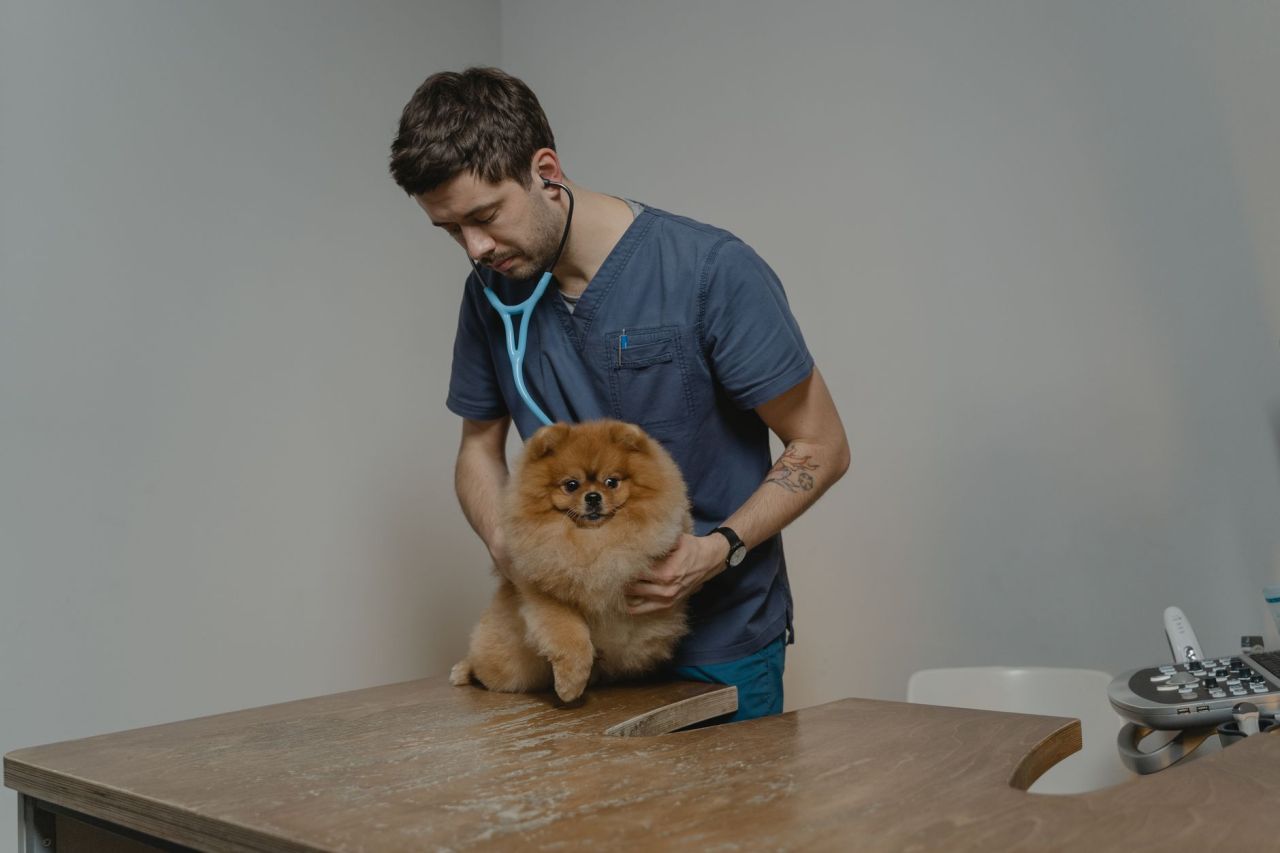
A sample for a DNA test can be taken with a mouth swab or a blood sample. DWV strongly advises having the sample taken by a vet, to guarantee reliable results. The breeder chooses the vet and the laboratory. The recognised breed registry association records the results and checks the data before it issues a pedigree.
Parentage verification
Besides the DNA tests for conditions, there is parentage verification: a DNA test that determines whether a puppy is the offspring of a given sire and dam. The parents and (part of) the offspring are checked. With an STR profile all puppies are tested; with an SNP profile the number of puppies tested depends on the litter size.
For buyers: what to ask the breeder
- Which DNA tests does the breeding programme make mandatory or recommended for this breed, and what are the results of both parent dogs?
- What is the breeding advice for this combination?
- Have the other mandatory examinations, for example hips, elbows, eyes or heart, also been done?
- Will the puppy receive a Flemish pedigree from a recognised breed registry association?
The breed profile shows which examinations apply to a breed. You can read more about the results under DNA test (hereditary conditions).
In short
- A DNA test examines one variant; the breeding programme states which.
- For autosomal recessive conditions, the breeding advice in most breeding programmes is positive as soon as one parent dog is clear.
- Carrier with carrier is subject to a breeding ban.
- A carrier can stay in breeding with a clear partner.
- Preferably have the sample taken by a vet.
Sources
- Fokkerijbesluit honden en katten (Dierenwelzijn Vlaanderen)
- Fokkerijbesluit: veelgestelde vragen (Dierenwelzijn Vlaanderen)
- Fokprogramma's honden (Dierenwelzijn Vlaanderen)