 Behaviour
Cavalier King Charles Spaniel
Cavalier King Charles Spaniel: character and temperament
Few dogs combine such warmth and adaptability as the Cavalier King Charles Spaniel. This small breed with its big, friendly eyes was originally bred as a lap dog for the British aristocracy, and you can still see that in its character. A Cavalier loves nothing more than being with its people and exudes calm and affection. Yet there is more to its temperament than just ‘sweet and affectionate’.
A real people dog

Cavaliers love company and thrive best in a household where there is plenty of attention and interaction. They form strong bonds with their owner and will often follow you from room to room. Being left home alone is therefore not ideal for this breed; they can suffer from separation anxiety if left alone too often or for too long. Anyone who works from home a lot or has a family where someone is always present will find the Cavalier a loyal shadow.
Friendly to everyone
Aggression or suspicion is not in this breed’s nature. Cavaliers are naturally friendly towards strangers, children and other pets. This makes them ideal as family dogs, even in households with cats or other dogs. However, their gentle nature means they are not the best watchdogs: a Cavalier is more likely to wag its tail at an intruder than to bark.
- Playful and affectionate without being overly pushy
- Good with children thanks to its patient nature
- Sociable with other dogs and often with cats too
- Little tendency towards aggression or dominant behaviour
Playful yet calm
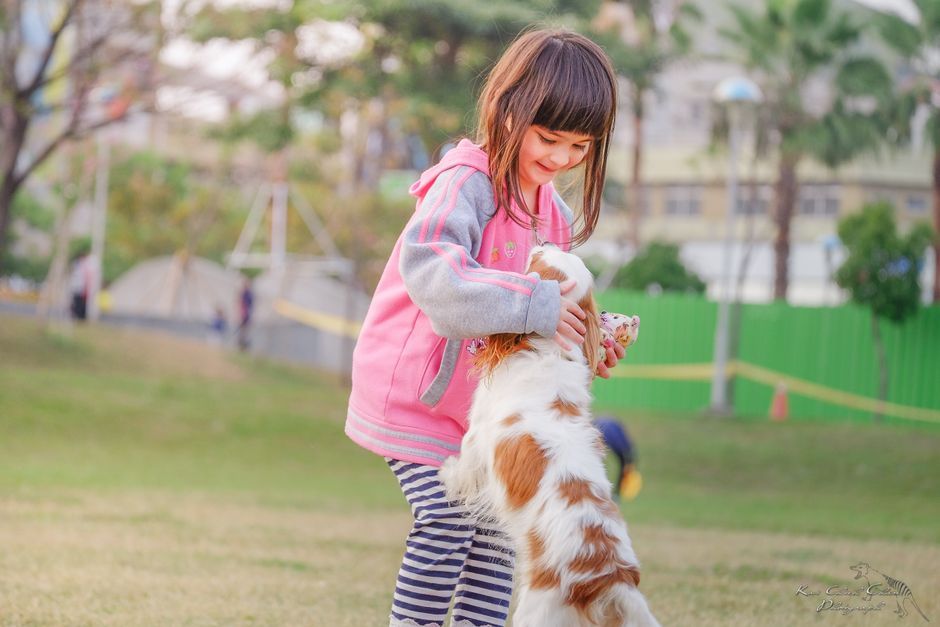
Although the Cavalier certainly has its playful moments and loves chasing a ball, it is also a breed that is perfectly happy to relax on the sofa. This balance makes it suitable for a wide range of lifestyles: active families who enjoy walking, but also quieter households where the dog spends much of the day lying comfortably by your side. Exercise remains important, but the Cavalier isn’t particularly demanding in this respect.
The Cavalier King Charles Spaniel is like a cosy blanket with little paws: always close by and always happy to see you.
An expert on the breed
Sensitive and eager to learn
This breed loves to learn and wants to please its owner, which makes training relatively straightforward. However, harsh corrections are neither necessary nor desirable: Cavaliers are sensitive souls who respond best to positive, consistent training with plenty of praise and rewards. An angry or stern tone can make a Cavalier feel insecure, whilst patience and encouragement yield results quickly.
Who is it suitable for?
Thanks to its gentle, sociable nature, the Cavalier King Charles Spaniel is suited to almost any type of family: from families with young children to older people looking for a calm companion. However, it is important to realise that this breed needs to be close to its owners; a Cavalier really comes into its own when it is allowed to be fully involved in daily life at home.
If you have any concerns about your Cavalier’s behaviour or welfare, always consult a vet or a qualified behaviourist for personalised advice.